Finding the right co-manufacturer was one hurdle for startup Jack & Friends
Frain was able to help provide the flexibility to find the right equipment
As we talk to startups and emerging brands throughout the food and beverage manufacturing space, arguably the most significant hurdle is figuring out how to get production scaled up—how to find a co-manufacturer or co-packer willing to work with them or how to find the capital to equip their own production lines before they’ve established a solid customer base.
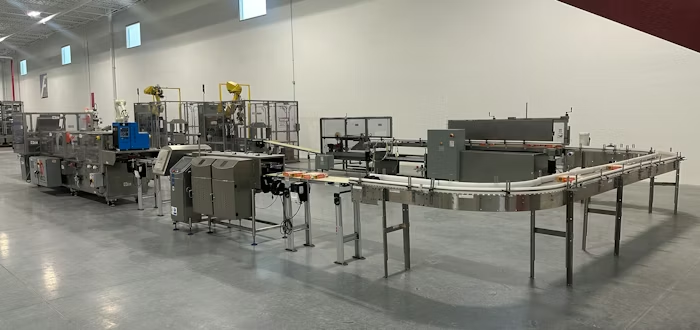
Jack & Friends, a plant-based startup in Great Neck, N.Y., went through some headache and heartache to find the right co-manufacturer, but then also needed to find a way to fill in the gaps in that co-man’s production line. A key factor in making everything work has been the startup’s ability to test out which equipment will work best for its jackfruit-based jerky recipe with rental agreements through Frain Industries.
Meet Jack
Jessica Kwong, founder and CEO of Jack & Friends, launched the company’s first product in 2019, less than a year after graduating from Cornell University with a bachelor’s degree in food science. Although she always wanted to do something more entrepreneurial, Kwong envisioned her immediate future after graduation learning product development through a series of internships and jobs for the R&D department of a medium to large food company. She was all set to head that direction, full-time offer from Mondelēz in hand, but the pull of the Jack & Friends brand was just too strong to ignore.
“Jack & Friends is really built on a larger mission to craft food, inclusive of different lifestyles, diets, and allergy restrictions, without having to sacrifice nutrition or quality,” she says. “This plant-based jerky was the perfect introduction—it’s vegan and Top 9 allergen-free, but still a good source of protein and fiber, with no added sugar.”
The company soft-launched its first SKU exclusively online in March 2019, and then had a hard launch with its full three-SKU set in June 2020—including Jack & Tom (tomato and poblano pepper), Jack & Barb (sweet barbecue), and Jack & Teri (ginger teriyaki). The products, all with a base of jackfruit and pea protein, are now sold online as well as in a few stores in New York and Massachusetts.
Jack & Friends has had its difficulties, particularly trying to launch, as it were, during initial COVID-19 lockdowns. “At that time, we were still self-manufacturing in a facility in Long Island City,” Kwong says. “We just didn’t have enough product to sell because we couldn’t make it fast enough. And we went through this whole zigzag of finding a manufacturer, and everything just took so much longer, given the state of the world.”
Jack & Friends had planned to work with a co-manufacturer before the pandemic hit, but then the co-man fell on hard times, and they found themselves back at square one. Now Jack is working with a manufacturer in Nebraska. “We’re finally in the place that we had hoped to be in before the pandemic set in, where we have this great contract manufacturing partner, we have scaled up production, and we have more inventory now,” Kwong says. “We can finally implement all these sales strategies that we wanted to implement and had in the pipeline, but just didn’t make sense when we didn’t have product on hand.”
If Kwong had things to do over again, she says she would have not only started her search for a co-man sooner, but would also have sought out specialized help sooner rather than trying to search on her own. The jerky business, she says, “is a very network-driven manufacturing industry, where it helps to have someone who’s been on the inside.”
Although meat-based jerky is not made exactly the same as plant-based jerky, it has still helped Jack & Friends to find a co-manufacturer that already had a strong background in jerky manufacturing. “It made sense to have beef jerky manufacturers because they have all the ovens, they have the knowledge of the cook cycles and how to properly dehydrate jerky-like products,” Kwong says. “More upstream in the process, it’s very different. So we had to work with their existing production lines and figure out where there were gaps that we had to fill in.”
Try Before You Buy
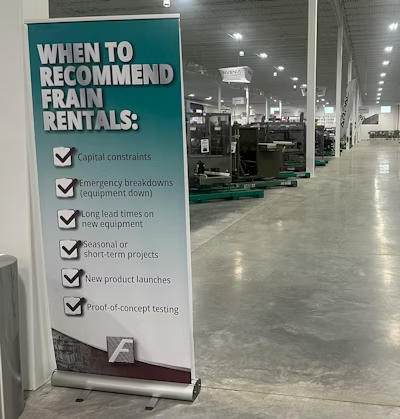
Filling in those gaps has been made a whole lot easier with rental equipment from Frain Industries. This gave Jack & Friends the flexibility to try out various types of equipment and capacities to figure out what might work best before purchasing.
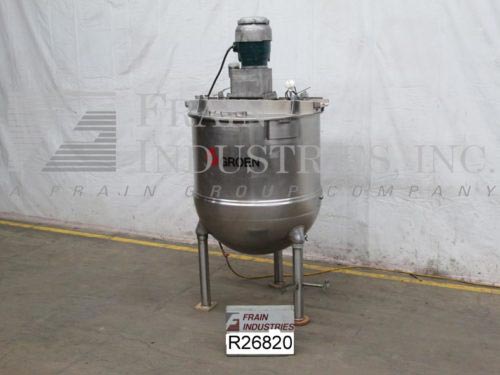
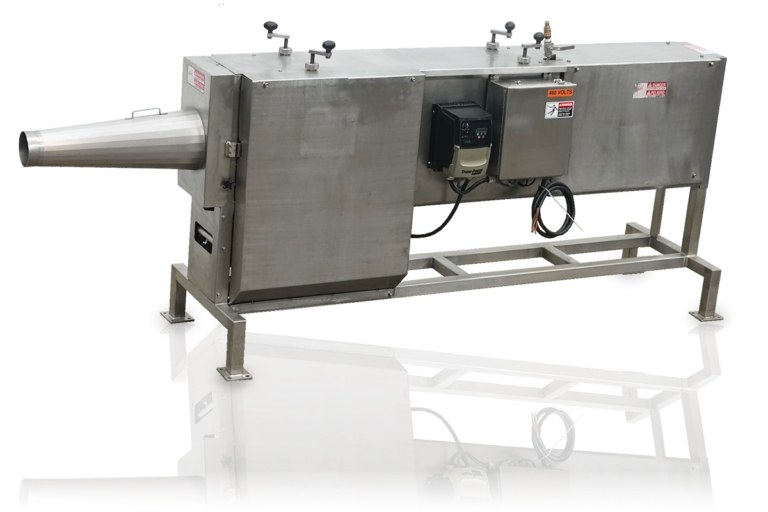
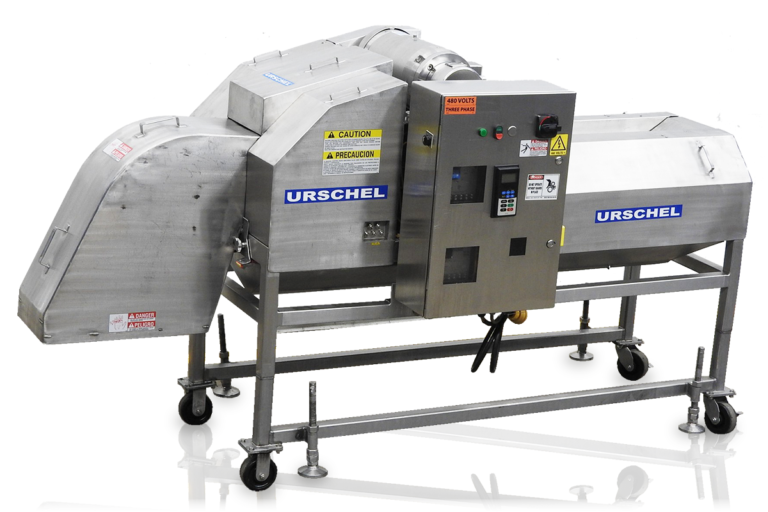
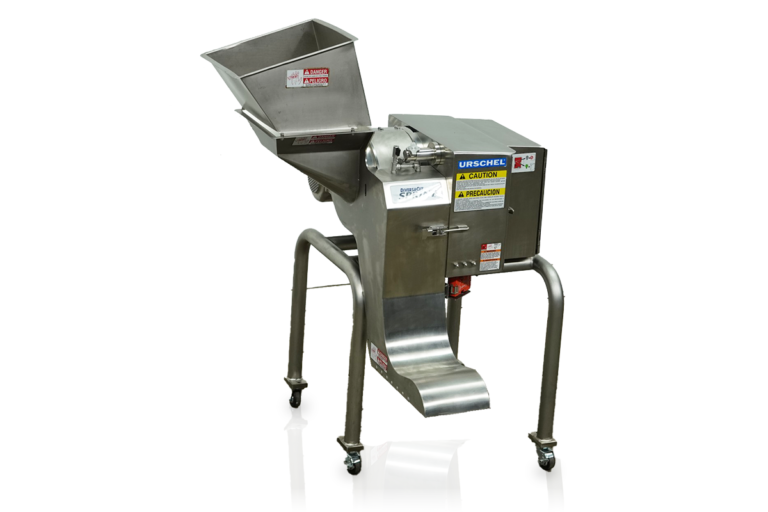
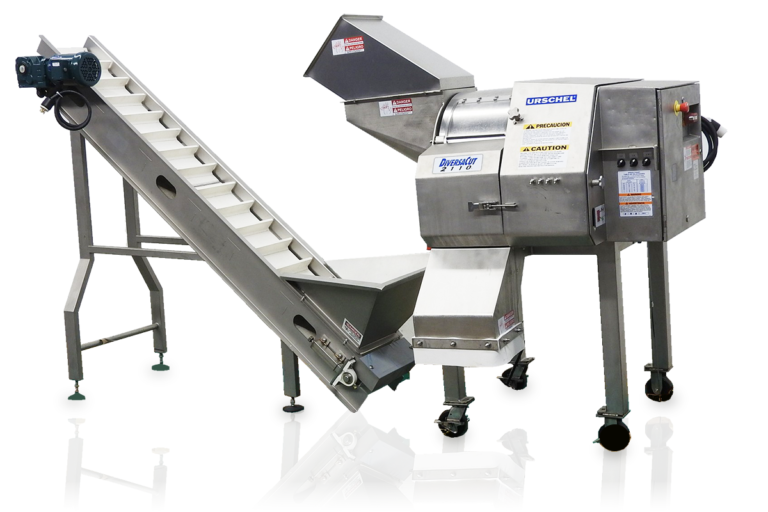
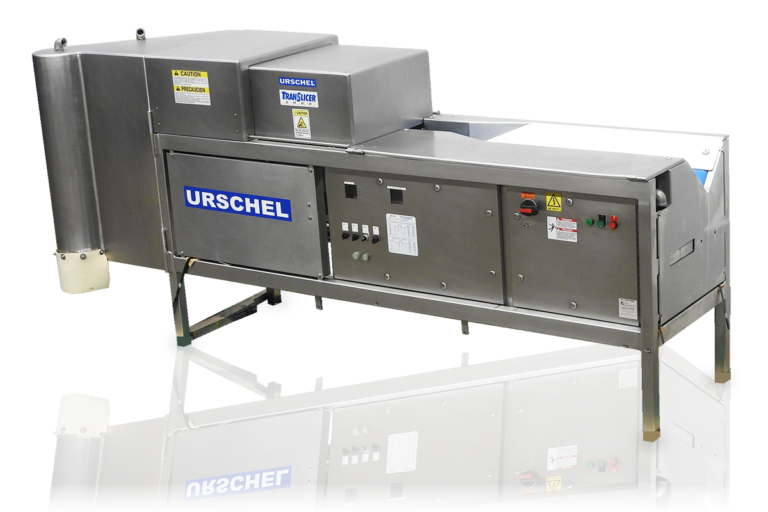
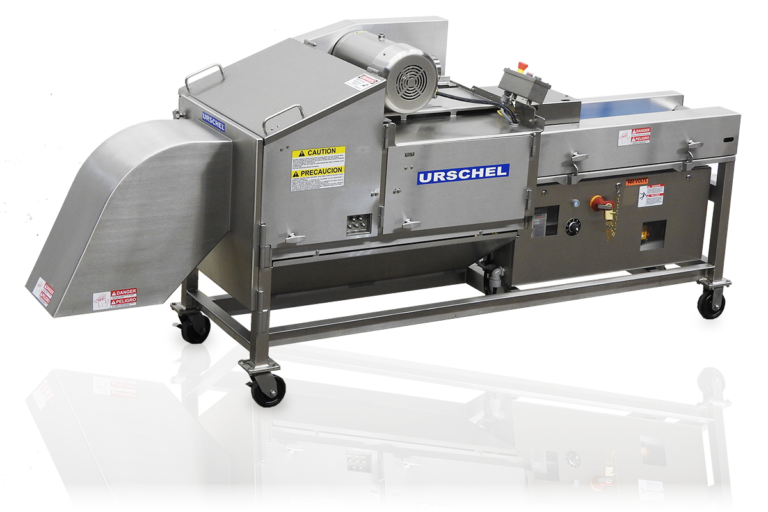
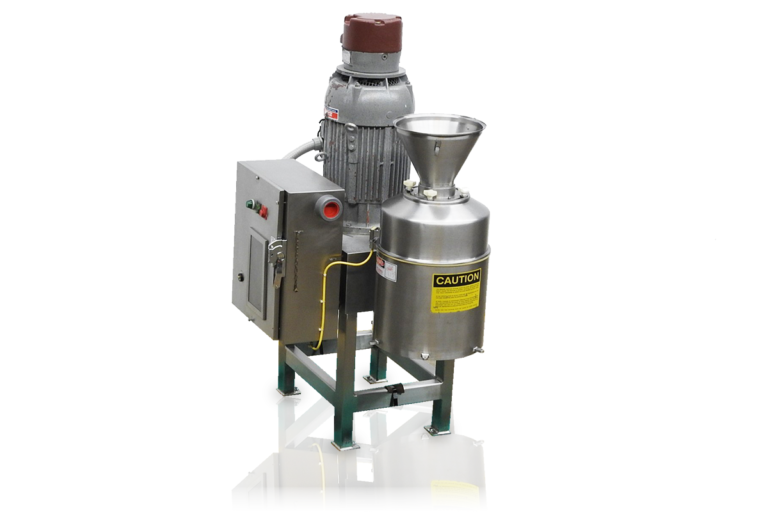
Two key pieces of equipment that Jack & Friends needed to complete the manufacturing line at the co-man were a kettle and a slicer. The jerky maker rented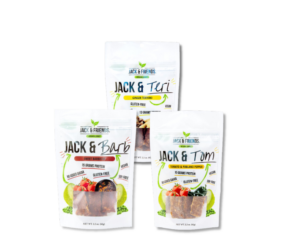 a Groen kettle and an Urschel cutter slicer from Frain.
The co-manufacturer already had a slicer that it uses to produce meat-based jerky, of course, but it didn’t quite work for Jack’s needs. “It’s almost like a water wheel. That works great for full cuts of meat and things like that. And we tested our ingredients on that, too. Obviously, if it would work, then there’d be no need to bring in other pieces of equipment,” Kwong says. “But it wasn’t giving us the right particle size and the right cut for what we needed, which is why we brought in this particular Urschel piece of equipment.”
As it turned out, the first Urschel slicer that Jack & Friends tried was exactly what was needed. “We actually ended up purchasing the same unit that we were renting from Frain from Urschel because we knew that we wanted this exact piece of equipment,” Kwong says. “It worked great when we rented it from Frain, so we figured it would just make sense to own it.”
The kettle was a piece of equipment entirely foreign to meat-based jerky production, so Jack & Friends knew it would have to incorporate in something new. “We have a unit process that requires a pre-cook step, so we needed some type of jacketed vessel, like a kettle, that could mix and heat up some of our ingredients prior to everything else that comes along with the process,” Kwong says. “For us, the kettle was the best option because it had both mixing and heating elements, and we needed something that could provide a decent amount of shear—so mixing quite fast to make sure there was no burning on the sides and it was being properly homogenized.”
There has been more trial and error with the kettle, so Jack is still renting that from Frain. “We’re still in talks with Frain to see if there might be a bigger option that we could rent,” Kwong says. “We’re looking at total capacity so that, as we continue to grow, we have the most efficient piece of equipment possible. But we also have to keep the other considerations in mind, like the mixing speed, we have to make sure any piece of equipment will have the proper shear action. We’re also looking at things that could have a jacketed heating element and some type of mixing, but isn’t necessarily a kettle. Anything that could be more vertical so that we’re utilizing the ceiling height and not necessarily taking up such a large horizontal footprint is something that we’re considering as well because, with our co-man, they have to be mindful of floor space. So we’re thinking about a lot of different options.”
In the meantime, Jack & Friends will continue to rent the Groen kettle from Frain so that production can continue while the food company figures out what the most efficient solution will ultimately be. With each piece of equipment, Kwong explains, there’s an initial three-month contract period, not to mention setup and installation. So it’s not as if Jack & Friends would want to keep trying option after option. “We want to be sure that we would have something with a very high probability of working,” she adds.
Solid Partnerships
Although it might seem fortuitous that the slicer was a one-and-done deal, it was also the result of guidance from Frain, Kwong notes. “We were pretty confident that that particular piece of equipment would work for us. And Frain’s group, they’re super knowledgeable,” she says. “We had a lot of conversations like, ‘This is what we’re trying to do. What equipment do you have that could do this?’”
Frain thought the Urschel slicer would be a good fit for Jack’s production needs. “They connected us to Urschel to do a test run at their R&D facility to make sure that it actually would process the ingredients as we intended, with our specific set of ingredients,” Kwong recalls. “So that whole process went very smooth, and we were pretty confident that that particular piece of equipment would work for us.”
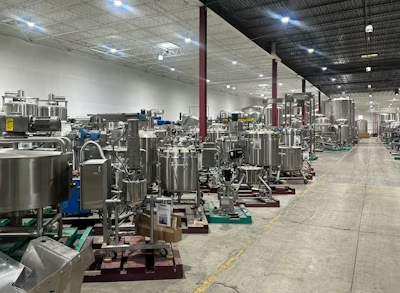
Frain already had the Urschel slicer in its large inventory of available equipment, but it was also able to leverage its network of equipment suppliers to get Jack & Friends the help it needed to test out its ingredients, Kwong adds.
Although Frain has some rent-to-own agreements, this piece of equipment was available only as part of Frain’s rental fleet, so Jack & Friends didn’t have the option to buy that slicer from Frain. Knowing that it was working well in production, however, made it easy to make the decision to buy from Urschel.
Meanwhile, Jack’s co-man has been patient as well, Kwong says. “This is a totally new product for them,” she says. “But they understand that the plant-based category is where the industry is heading as well, so they’re very keen on maintaining or keeping up with innovations as they come along. They’ve been very good about working with a smaller startup like Jack & Friends and being more flexible with what we need because they know that we’re trying to figure it out and obviously do right by them as well.”

Frain Has slicer Equipment In-Stock
and Ready for FAT in 48 Hours
Frain Has kettle Equipment In-Stock
and Ready for FAT in 48 Hours
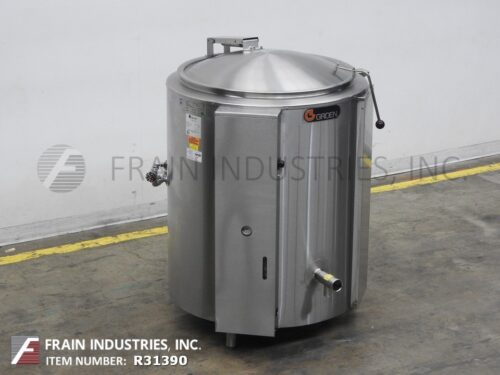
Groen Electric EE100
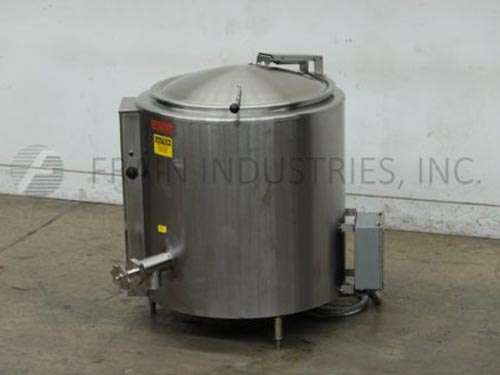
Groen Kettle Electric AE180
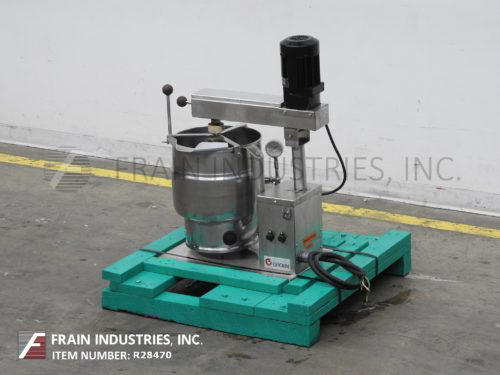
Groen Kettle Electric 20 QTTDB7