I recall going to computer class and inserting two floppy disks: one to boot the computer and another to play a game. At that time, patience was key because loading took about 5-10 minutes…nothing compared to the current 30-60 second loading time.
Floppy disks were revolutionary from the 70’s to 90’s and were considered an inexpensive “high-speed mass storage” apparatus, but were ‘read-only’ when first introduced. As time passed, floppy disks got smaller and transitioned to ‘read-write’ disks while becoming more budget friendly and doubling in capacity.
The push for even more convenient data storage surged and floppy disks began to fade out. Technology giants introduced superior data storage tools, like USB flash drives, external hard drives, and memory cards. The face of social media and a ‘share’ generation may have enabled cloud storage to hold massive amounts of media and data files available from any device upon login.
At their peak, floppy disks were high-tech, but technology advancement left them in a distant past. In a similar manner, automatic machinery is changing the way manual processes are perceived.
The industrial revolutions, for instance, took hand-crafted products to machine generated commodities that reduced time and labor and revolutionized American living with innovations like the lightbulb.
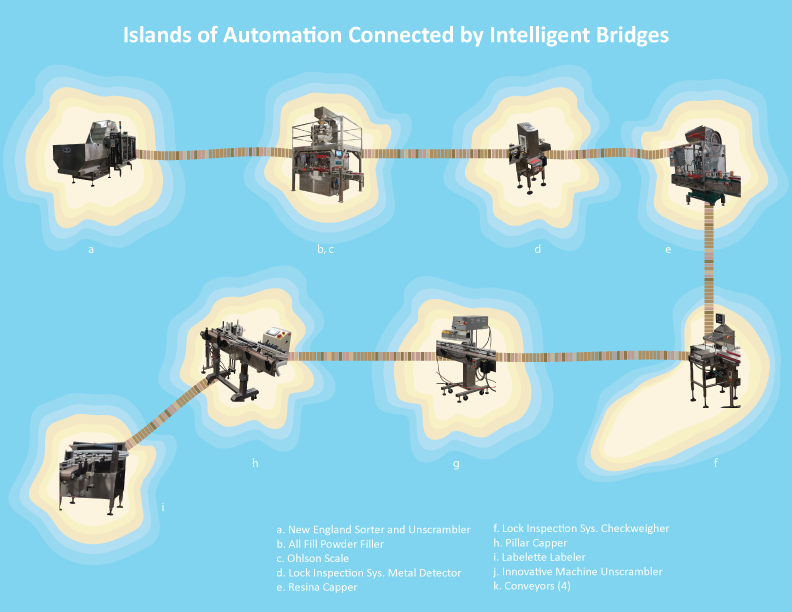
As in the past, innovation and consumer demand continue to spark mass production and thus, companies convert manual or semi-automatic practices to automatic methods as business takes off.
Companies looking to increase production/output requirements, new product roll out, open a plant and more come to Frain for semi-automatic, automatic, or integration requirements. Frain’s vast packaging and processing inventory has the equipment to get customers to market faster than anyone else in the industry.
The packaging and processing industries have primarily gone from manual to automatic like storage went from floppy to cloud, and although disks are still being used today in different industries like embroidery and aviation, there is a limited supply and companies will be forced to transition to newer technology.
Stay ahead of the game. Increase capacity, facilitate quality control and improve efficiency with semi-automatic or automatic equipment provided rapidly and conveniently.
Resources:
https://www.digitaltrends.com/computing/why-do-floppy-disks-still-exist-the-world-isnt-ready-to-move-on/
https://www.loc.gov/teachers/classroommaterials/primarysourcesets/industrial-revolution/pdf/teacher_guide.pdf