“Handmade.” “Handcrafted.” “Artisanal.”
These are some of the words used to describe product containing a lot of manual labor. Advertising for handmade products often advertises how much love has gone into them by the craftsperson. “No two exactly alike” is another tag line we may see.
This is usually presented as a good thing. And it is, for works of art where creativity determines the final outcome. It’s also a good thing when consumers are looking for a unique product. In general, though, it is a bad thing. In most cases, “handcrafted” means that an individual, or a factory/group of individuals, tried to make multiple identical copies of the same thing and failed. Adding “handcrafted” to the promotional material can be a way of covering up that failure.
The best definition of quality is “Absence of variation.” The Taguchi Loss Function tells us that variation, even within acceptable limits, always has a cost. Handmade, by its very nature will never produce a quality product.
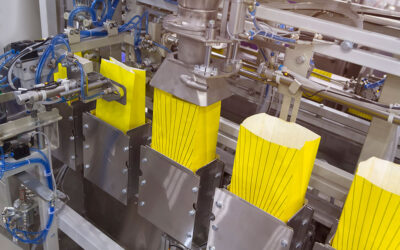
It is only with machinery, the more automated the better, that we can get close to a quality product. Even with high precision machinery, we will never quite achieve the perfect product. There will always be some variation but good automated processes will minimize it.
In your production process, how many times does a person (rather than a machine) touch your product? Whenever they do, think about the best thing that can happen. Generally, the best thing that can happen is that the product continues to be in spec.
More often, there will be some, albeit slight, imperfection added to the product. It may be something as subtle as fingerprints on a glass bottle. It may be something more significant like a loose or over-tight cap or a crooked label. The customer sees this on a store shelf and the reaction, often subconscious, is “If the company can’t get the label (which I can see) straight, what else did they get wrong (that I don’t see)?”
We can only make quality products via automation. Don’t touch it.
Need to learn more about packaging automation? My Packaging Machinery Handbook is a good place to start. Also, talk to the experts at Frain Industries. Their centuries of collective experience will help you understand your choices and make the right ones.