Tag: packaging

Who Buys or Rents Used?

Loads of companies now buy used machinery.

The market demands machinery quickly and at a discount of new.Frain is transforming the used machinery sector with

Frain is transforming the used machinery sector with certified pre-owned equipment that is delivered fast and at a discount of new.

We are the largest provider of used packaging and processing equipment. Frain offers a wide variety of items, like machines and attachments, where customers can get their money’s worth.

So why is Frain’s used equipment best for your business?

All of our processing machinery, packaging equipment and complete lines:

We work with small and large companies, including Fortune 500, that turn to used machinery not only to save money, but for our equipment inventory, condition, and availability, professional staff and services, and most importantly, to save time and get to production faster than their competitors.

See the equipment we have to offer or contact us for more details.

Super Bowl Ready

With the Super Bowl Sunday approximately 4 days away, I’m taking the opportunity to draw comparisons among our industry and THE game we love to watch.

Just like Marshawn Lynch, a.k.a. beast mode, getting showered in Skittles or Bill Belichick getting soaked in Gatorade, you’re going to witness how the NFL collides with the CPG industry on the greatest stage once more on Sunday.  It’s going to be awesome.

To begin sort of a virtual tailgate conversation…Here’s a quick look at how football intersects with the packaging world and what makes Frain your key to getting the W.

Kickoff & Handoff

This year’s Super Bowl will kick off with country singer Luke Bryan singing the national anthem. At Frain, we kick off every equipment conversation with an experienced engineer, who will match you with the best processing and processing machinery, or complete packaging line.  After fully vetting your options and selecting one, we’ll also conduct a handoff call, which is a final comprehensive equipment review before you visit us for the factory acceptance test.

ryan-brady-falcons-pats

Blitz

Just as Tom Brady and Matt Ryan are sure to see rapid deployment of defensive ends coming off the edge to make a sack, Frain specializes in rapidly deploying our vast inventory of 9,000 machines, allowing you to sack your competition and maximize revenue.

Blocking and Tackling 

You don’t necessarily have the luxury of throwing your “A” team at launching new products.  No problem – use ours.  We have the team nucleus needed to get your new machinery running and field services who can install on site and service machinery to avoid downtime or overtime.

With our vast inventory and over 50 technical and engineering resources, Frain allows you to blitz revenue opportunities while insuring you with the best free safety in the game – our rental and lease purchasing term options.

Flea Flicker

Aside from the steady dose of entertainment that this matchup is certain to provide, we’ll also look forward to shenanigans and chicanery provided by halftime entertainment, Lady Gaga, and TV commercials promoting top brands in the CPG space.

According to Variety, a 30-second spot will cost over $5 million on average.

Here’s an early look at some $5-million dollar spots:

Enjoy the game!

Image Source:  www.sportsinsights.com

Stand-Out Packaging

Media consumption and exposure continues to climb at an ever-increasing rate.  It’s estimated that U.S. adults are exposed to approximately 10 hours, 39 minutes of media per day.

The same fight for attention happens in retail and e-tail with merchants carrying tens of thousands of items or in the case of Amazon, more than 500 million.  Think about that for a minute.

So, how do brands develop innovative and attention-grabbing products, packaging, etc. that stand out?

Just like media headlines, e-commerce websites are able to simultaneously test messaging and imagery to understand what offers, packages, colors, words work best.

Data then points to which package or collection of words, images, etc. will offer the largest return on eyeballs.

The key for brand companies becomes not over-analyzing what to launch but launching variety efficiently and while mitigating or removing risk altogether.

Frain has worked on dozens of large brand projects over the past couple years.  From these projects, we’ve seen a shift in the way projects run.  Companies are now more nimble than ever, getting to market faster by renting resources and equipment and shutting down or ramping up production based on the data.

The focus used to be on trying to launch the perfect project, inexpensively – which may have included finding a machine at a lower cost.

But, now, realizing that days or even minutes of a successfully running project can pay for the machine or at least for the price to rent, and ability for equipment customers to rent – we’re seeing multiple product packaging launch ideas come thru all at once to increase speed to market, data, and revenue.

As we know the insatiable market demand for more variety exists, as does the opportunity to seize this demand quickly to maximize revenue.  The difference between winning and losing today is the ability to act and act again based on data.

“I have not failed. I’ve just found 10,000 ways that won’t work.” – Thomas A. Edison

Whitepaper: Shrink Wrapping

Strictly speaking, shrink wrapping is not considered “flexible packaging.” However, wrapping does use flexible film and foil of various materials and combinations. Many of the general considerations for films discussed in previous whitepapers on Form-Fill-Seal and pouching machines will apply to wrapping machines as well.

The film used in shrink wrapping is a typically a single layer polyethylene or polypropylene though other plastics and multi-layer films can be used. It is manufactured so that on exposure to heat, it shrinks by about 30 to 80%. If multiple layers of shrink film are to be used, for example to bundle several shrink wrapped trays, the films must be selected so that they do not bind to each other when heated.

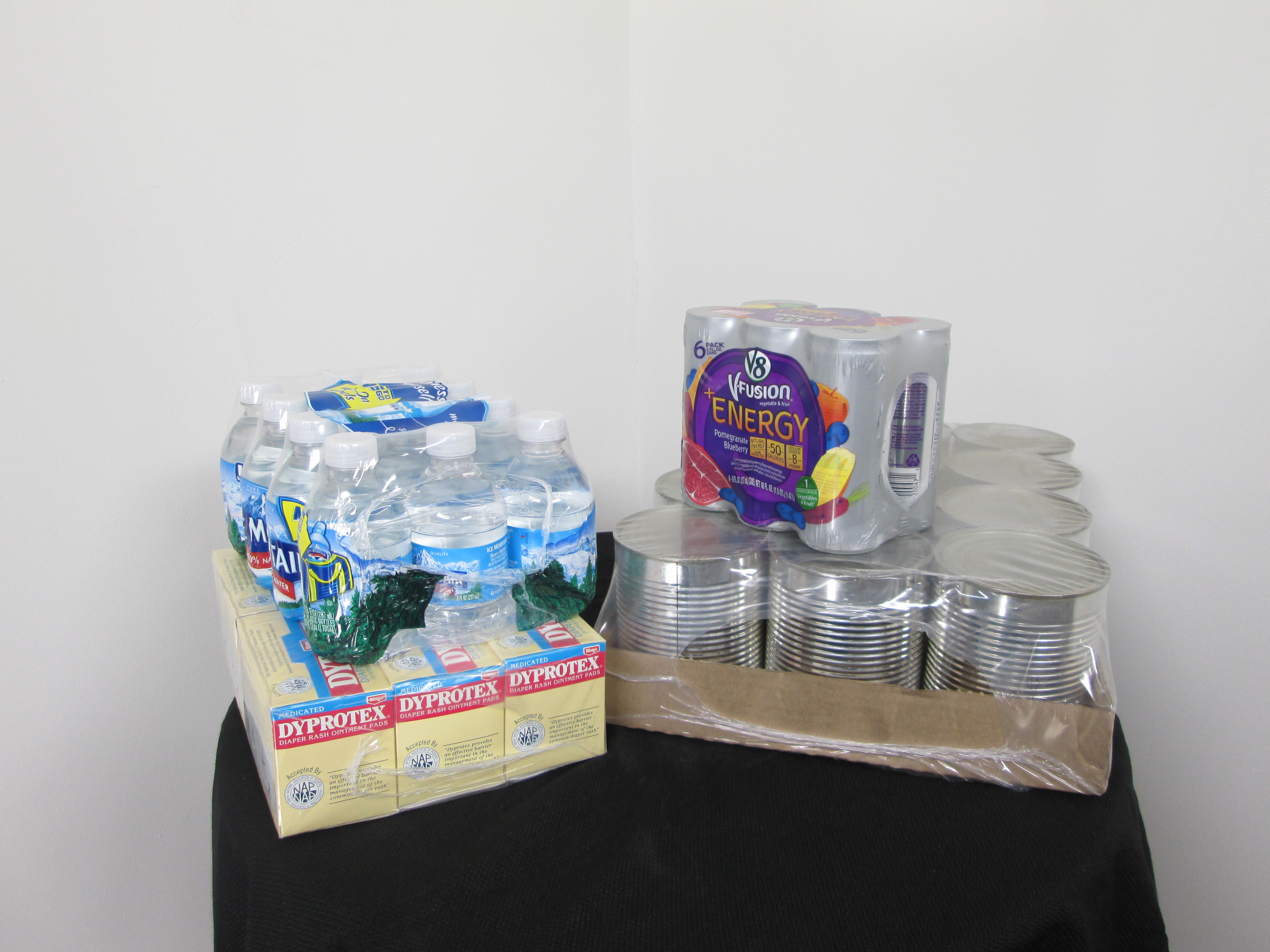
Shrink wrapping is sometimes used as the primary packaging. Some individual foods, soaps and other products may be wrapped directly. More commonly shrink wrapping is used as a secondary or tertiary packaging. An example of secondary use is shrink wrapped six-packs of beverage cans or 24 pack bundles of water.

Wrapping is also commonly used as a tertiary packaging such as overwrapping an individual carton or bundle of cartons. In the past, appearance of the tertiary packaging has not been considered critical important as the customer never saw it. The rise of club stores like Costco and Sam’s Club has changed this. The 6 pack of canned corn is now the unit of sale in these stores and appearance has become critical to branding. Previously translucent grey film was fine since nobody outside of the stockroom was likely to see it. Now, glossy film with registered graphics is needed to catch the customer’s eye using bullseye or end seal wrapping. This affects the choices of machinery that can be used.

Download the complete Shrink Wrapping Whitepaper to continue learning about different types of wrappers.

Ace of Machinery

You’ve heard the saying:

“Jack of all trades, master of none.”  Basically, it refers to someone possessing many skills, but mastery of no particular one skill.

The opposite could be said about Frain Industries.  Frain has successfully modified machinery spanning hundreds of packaging and processing categories to meet the needs and timelines of thousands of customers and projects.  The knowledge and skill sets of our engineers and technicians are as diverse as the inventory we hold in over 1.5 MM square feet of inventory.  Click here for a tour.

Regardless of the category we’ll meet your equipment specifications and timeline.

Here are some of recent case studies:

  • Global Confectionary Manufacturer Gets Millions of Incremental Revenue with Speed to Market
  • Luciano Introduces Manufacturers to Used Packaging Solutions
  • As Hurricane Relief Needs Heat Up, Heatermeals Responds with Self-Heating Meals
  • Leading Yogurt Company is Up and Running 75% Faster

Ultimately, our expertise and speed to market capabilities become your ace in the hole.

Aesops Fables – Tortoise and the Hare

Most of us, when we were young’uns, heard Aesop’s fables. Perhaps the best known is the story of the turtle and the hare: One day they decide to have a race. The hare is pretty fast and does not view the turtle as much of a challenge. He takes off but then stops along the way for a beer or two, runs fast for a bit more than has some lunch and so on. The turtle is a lot slower but is steady. In the end, the slow but steady turtle wins the race.

Packaging lines are like that sometimes. We think that running them faster will result in more output. Sometimes it does but sometimes we get the opposite.

Years ago I was a young maintenance manager in a pharmaceutical plant. One of the products was a suppository that was strip packed between two foil laminates. It was not a terribly sophisticated process and the strip packing machine was supposed to run at 60ppm. At least that is what the manual said.

When we ran it at 60ppm, there were about 25% rejects. Some of this was crushing the suppository between the jaws, some was the laminate not sealing correctly some was due to other issues.

Through trial and error when the packaging manager was not looking I found that we could almost completely eliminate the rejects by slowing the machine from 60ppm to 50ppm.

As soon as I would leave, and the packaging manager would find that I had slowed down his machine, he would crank the speed back up to 60ppm. Rejects went up as well.

Running at 60ppm with 25% rejects, meant a true output of 45 good products per minute. When the loss from damaged product and the time to rework leaking packages are included, it is considerably less. Over a 420 minute shift, it would produce 18,900 good products.

Running at 50ppm with 3% rejects true output is 48.5ppm or 20,370 good products for the shift.

I never could get the packaging manager to understand this:

Sometimes you just have to slow down to go fast.

Samples are the Secret

Bundler

Do you want your packaging line project completed on time? Then pay attention to getting samples to the machine builder on time. The single biggest cause of delay in the thousands of projects we have built is product, component, and package samples. These delays are often not day for day. Samples that are 5 days late may cause another project to leapfrog yours in the production queue. The 5-day delay in your
samples may result in a multi-week delay in your project.

There are 4 tranches of samples in most projects. Failure to get any one of them to the builder on time will delay your project:

  • Quoting samples are used in small quantities, perhaps only a single example of each format, to develop a proposal. Builders may even need to quote from drawings because the package has not been made yet. In these days of rapid prototyping, this should be rare.
  • Engineering samples are samples in larger quantities (perhaps several hundred) that are used by the builder’s engineering team to develop the final design. Quantities required may vary. In some cases, such as a fairly standard cap, a few samples may suffice. In other situations, the engineers may need to do testing development and will require larger quantities.
  • Testing samples are required during the build to test various components of functions of the machine.
  • Finally, fresh samples are necessary for the Factory Acceptance Test (FAT).

Samples must be identical to those which will be used in production. In one case, a company bought a vial stoppering machine and all the samples sent to the builder were dry rubber. It was not until they commissioned the machine that anyone realized that the operators lubricated the stoppers with silicone. Naturally the machine did not run anywhere near the rated speed. Problems that show up early at the builder are much easier to fix than problems that come later in the field.

The builder will tell you how many samples are needed and when. Make sure that you send at least as many as requested and make sure you send them when requested. Giving the builder good samples (on time) will go a long way to keeping your project running smoothly.